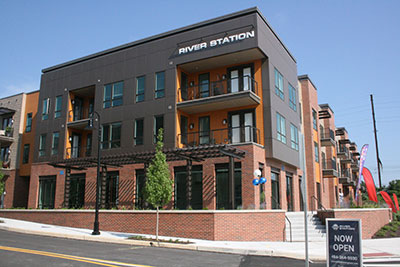
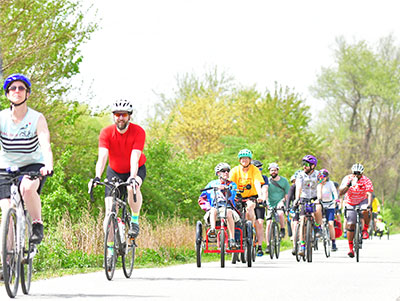
The overall vision of Landscapes3 is: "In 2045, Chester County abounds with healthy natural areas, robust farms, cherished historic sites, diverse housing, thriving businesses, quality education, accessible transportation, and vibrant communities for all."
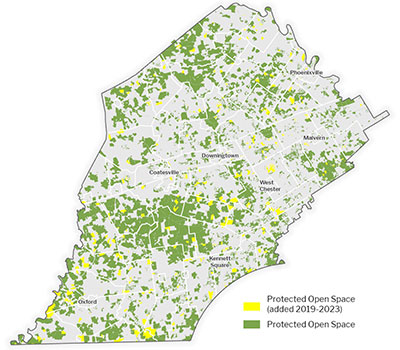
How have we done with this Vision over the past five years? Overall, pretty good, despite the pandemic and its many impacts that are still reverberating throughout our society and economy. We have continued preserving significant open space, modernizing our agricultural industry, preserving historic sites, building more apartments and townhouses, expanding our businesses, upgrading our educational infrastructure, adding trails and sidewalks, and improving our local communities.
Not everything has been perfect, but, in the face of tremendous international and national crises and ongoing development pressure, Chester County has balanced its growth and preservation fairly well.
To assess how we have done, the planning commission analyzed the implementation of the 57 Landscapes3 recommendations, measured on-the-ground change with a variety of metrics, and identified where development occurred in relation to growth and rural resource areas.
The 57 recommendations in Landscapes3 provide specific guidance on how the county, the planning commission, and all of our partners can make progress on the vision, goals, and objectives. Progress has been made on every recommendation, with significant or very significant progress on 52 of the 57 recommendations. It is clear that everyone has been working hard to implement the county's plan.
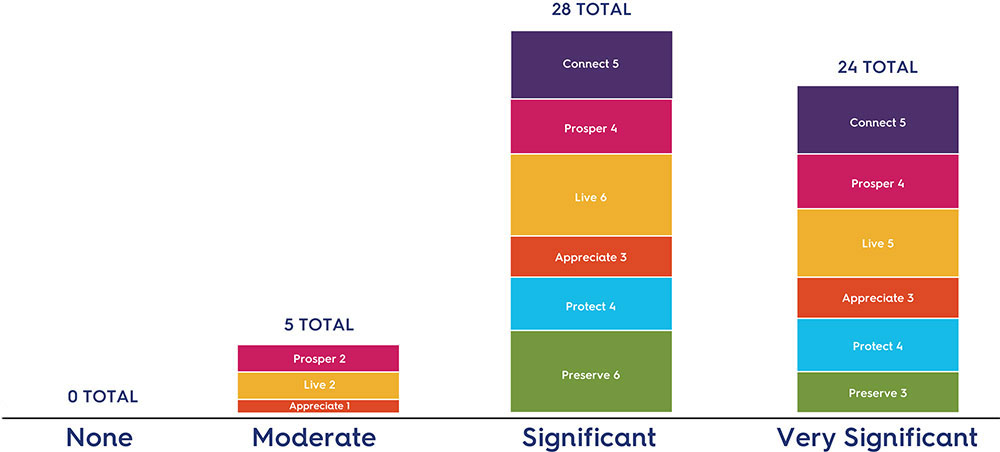
Progress has been made on every recommendation, with significant or very significant progress on 52 of the 57 recommendations.
In particular, there has been substantial progress on plan preparation that has provided guidance on specific topics, while identifying additional work to be done. These plans include a new climate action plan, an agricultural economic development plan, a watersheds plan, a heritage tourism plan, a freight plan, a draft trails plan, and a draft public transportation plan.
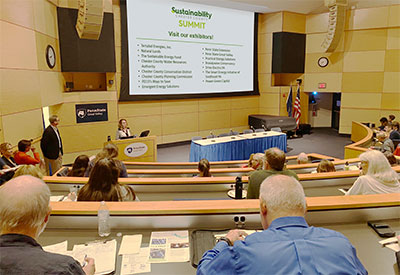
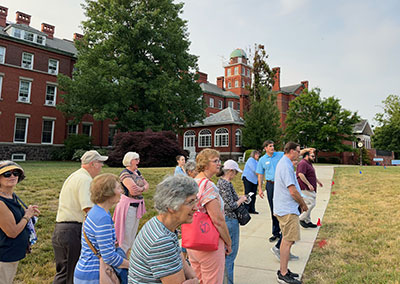
Chester County held its first-ever Sustainability Summit on September 26, 2023.
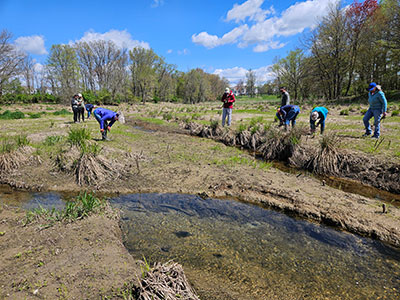
In addition, there was substantial progress on outreach and education, including the hosting of many events and summits, the production of a wide range of educational guides, and the sharing of tailored recommendations to municipalities on key planning topics. These topics focused on open space preservation, appropriate solar ordinances, natural resource protection, housing affordability, expanded mobility options, complete streets, ag-friendly communities, and historic village preservation.
Landscapes3 wasn't just implemented with the production of topic-specific plans or the dissemination of new educational materials. It was also implemented on the ground by every organization involved in some way with the built and natural environments in Chester County. Substantial progress was made on preserving farmland, expanding recreational opportunities, potentially expanding passenger rail service, and expanding the regional trail network.
There were a few recommendations that saw limited implementation over the past five years that should be reexamined over the final five years of the plan. These include fostering of historic preservation funding programs, promoting universal design, supporting emergency service providers, ensuring economic development planning is up-to-date, and encouraging suburban center investment.
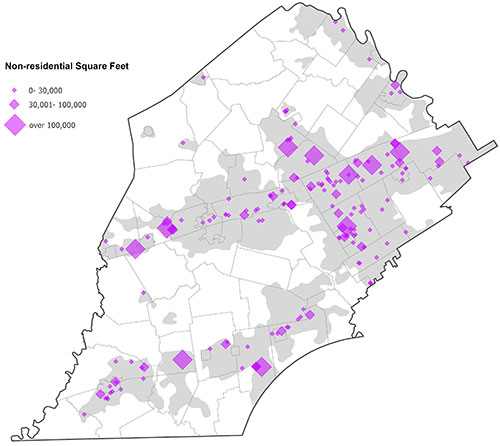
Non-residential Development in Growth Areas (2019-2023)
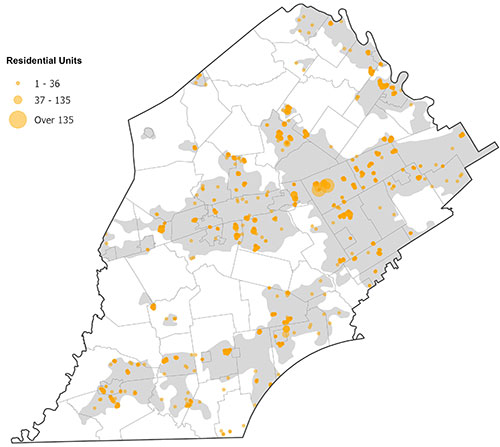
Residential Development in Growth Areas (2019-2023)
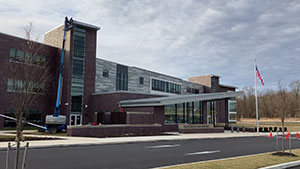
Non-residential growth in the Suburban Landscape.
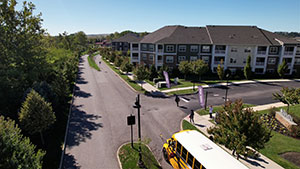
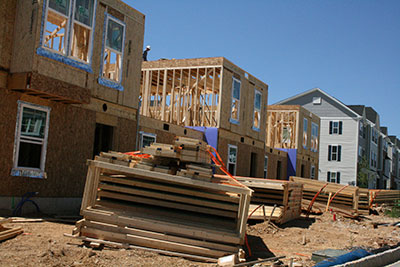
Residential growth in the Suburban Center Landscape.
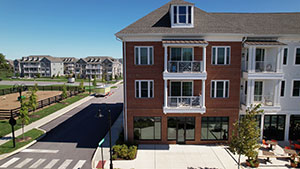
Mixed-use growth in the Rural Center Landscape.
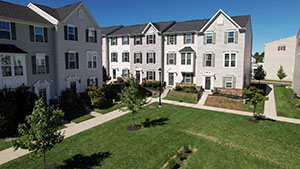
Residential growth in the Urban Center Landscape.
Was this development smart growth, meaning did the development go to growth areas, especially urban and suburban centers? This is a key question and one of the fundamental goals of Landscapes3. Overall, it does seem that the development was primarily smart growth. Was it all smart growth and was it all well-designed development that fits neatly into the county's existing character? The answer to these questions is clearly no. There were a number of greenfield developments, particularly in the county's rural landscapes or the edges of suburban areas, that stand out as properties that would ideally have been preserved as open space. And quite a few developments did little to preserve natural features, open space, and historic resources or to encourage walkability, community character, or mixed uses.
Despite these sprawling developments, there was also a lot of growth in appropriate locations that preserved important site features while encouraging walkability and community character. For example, the Urban Center and Suburban Center landscapes only have 7% of the county's total land area, yet 48% of the new homes and 49% of the new nonresidential development built in the county from 2019 through 2023 went into these two landscape categories.
Approximately 9% of new homes were built in the Rural or Agricultural landscapes, which is about what Landscapes3 anticipated for smart growth to occur. Most of these development were either clustered with preserved open space and protected natural features or were very low density. From 2005 to 2015, 20% of the homes that were built went into Rural or Agricultural landscapes; so, the construction trend has improved tremendously.
On the nonresidential front, approximately 11% of the new building square footage was built in the Rural or Agricultural landscapes, with a little more acreage consumed, 526 acres, than ideal. It should be noted, however, that Landscapes3 anticipates some nonresidential development in rural and agricultural areas, particularly agricultural buildings and low intensity institutional development.
Generally, the new development built between from 2019 through 2023 has followed broad smart growth parameters.